Solar-Compatible Home EV Charging in Ballarat
If your Ballarat home already has rooftop solar, a smart EV charger may be able to make better use of it. This page is for local homeowners who want to understand what solar-compatible charging can realistically do, what it depends on, and what needs checking before you choose a charger.
The idea
Charging your car from rooftop solar
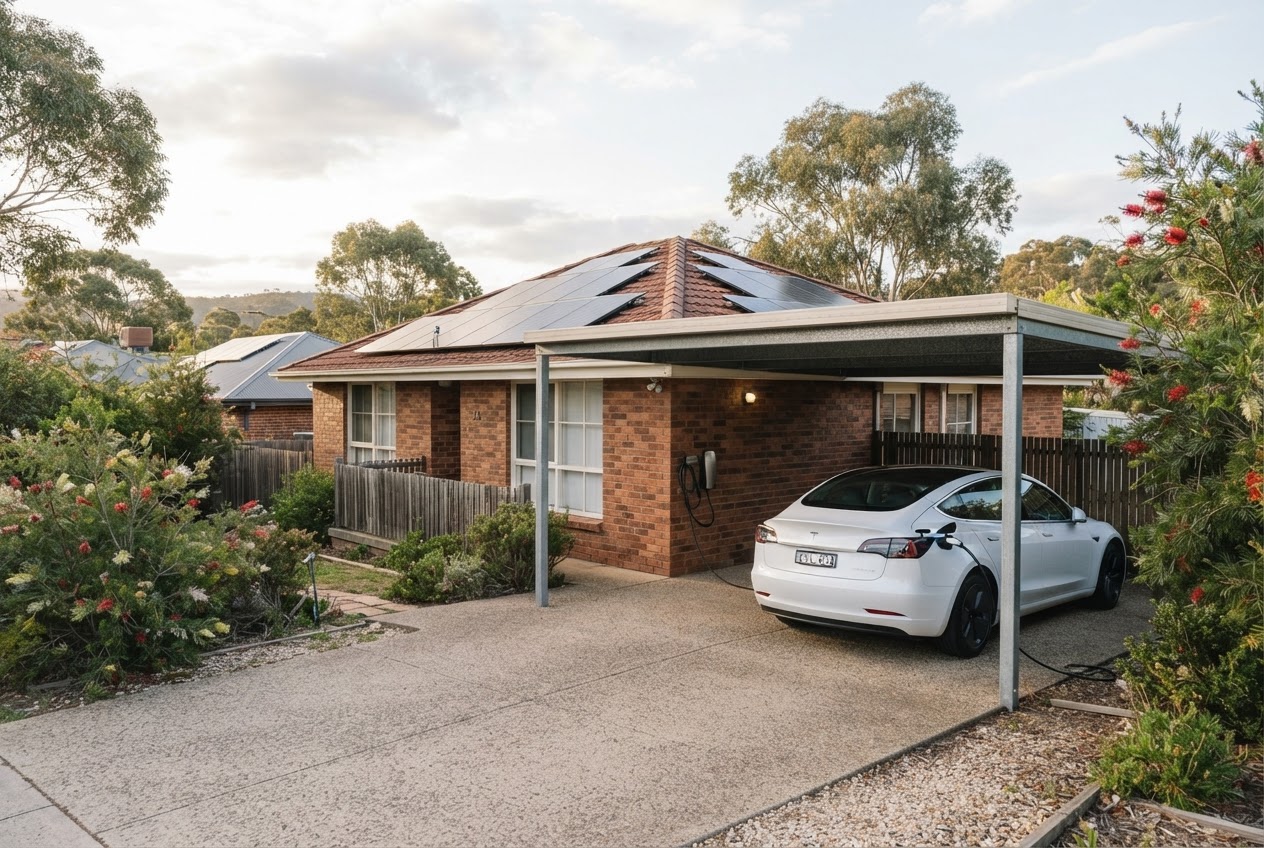
When your panels are producing more than the house is using, that surplus normally goes to the grid. A smart charger can, in the right setup, use some of that surplus to charge the car instead — which is why solar households often prefer to charge during the day rather than overnight.
How well this works depends on the charger, your solar system and your metering. Some chargers offer a solar-tracking mode using a metering device at the switchboard; others simply allow scheduled daytime charging. Both are useful, but they're not the same thing.
What it depends on
Charger, inverter and system compatibility
Not every charger integrates with every solar system. Solar-aware charging generally requires a charger that supports it, compatible metering, and in some cases a supported inverter or manufacturer ecosystem. Mixed-brand setups can work, but it has to be confirmed rather than assumed.
Your inverter size, panel array output, and whether the system is a newer hybrid inverter all affect what's practical. Older systems may have fewer integration options while still being perfectly capable of covering daytime charging through simple scheduling.
Daytime versus overnight charging
Daytime charging suits solar households and people who work from home or have a car parked during the day. Overnight charging suits commuters and can align with off-peak tariff periods. Many Ballarat households end up doing a mix — solar top-ups on weekends, overnight charging midweek.
Solar-only charging has limits
In Ballarat's cooler, cloudier months, output drops and solar-only charging can be slow or intermittent. A typical rooftop system may not consistently produce enough surplus to charge at full rate, so most setups supplement with grid charging. Charging purely from solar isn't a guarantee.
Related equipment
Batteries, load management and tariffs
Home batteries. A battery adds another user of your surplus solar, so priorities between the battery and the car need to be set thoughtfully — usually within the battery or charger's own settings.
Load management. Where available capacity is limited, load management lets the charger reduce its draw when the rest of the house is busy. This can be the difference between a workable installation and needing supply upgrades.
Tariffs. Off-peak or EV-specific tariffs can make overnight charging attractive even in a solar home. Your retailer plan, feed-in rate and metering all influence what's cheapest for you, and that's worth checking with your retailer.
Why an assessment is needed
Solar-compatible charging touches your switchboard, metering, inverter and charger all at once. An assessment confirms which combination is actually achievable at your property before you commit to a charger model.
Pair your solar with home charging
Send a few details about your vehicle, parking area and switchboard and we'll help you understand the next step.