Home EV Charger Buyer’s Guide
Choosing a home EV charger comes down to matching the charger to your home's supply, your vehicle's limits and how you actually drive — not chasing the biggest number on the box. This guide walks through what matters, in plain language, for Ballarat homeowners.
Step 1
Match the power to your supply
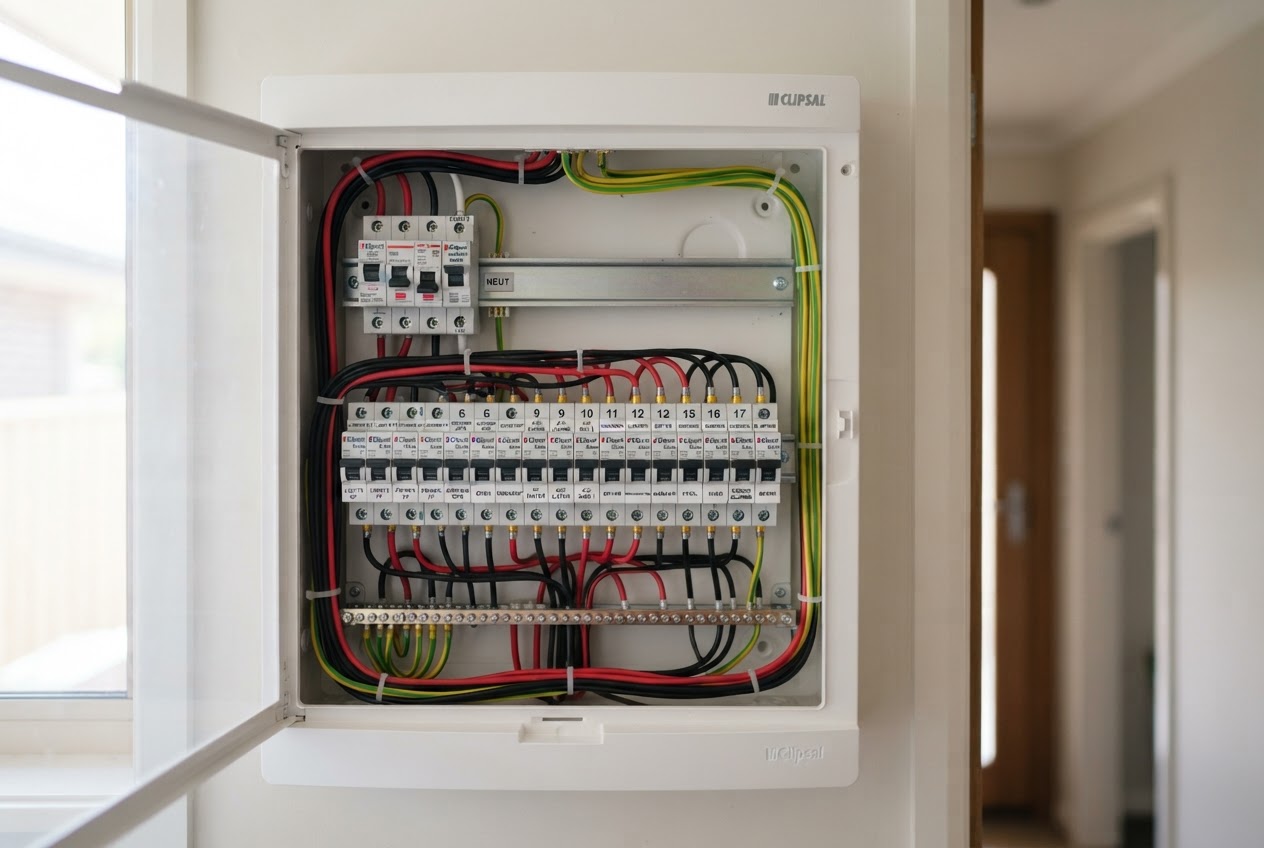
The first decision is the power rating, and it's mostly decided by what supply your home has. A 7kW charger runs on single-phase supply, which most Ballarat homes have. A 22kW charger needs three-phase supply. You can't get 22kW from a single-phase home without a supply upgrade, and that's rarely justified for charging alone.
Start here: find out whether your home is single-phase or three-phase before looking at chargers. A photo of your main switchboard and meter area is usually enough to tell.
Step 2
Check what your vehicle can actually accept
Every EV has an onboard AC charger with a maximum rate. Many accept around 7kW, some 11kW, fewer the full 22kW. If your vehicle tops out at 7kW, a 22kW wallbox charges it at 7kW — the car sets the pace, not the charger.
Look up your vehicle's onboard AC charging limit in its specifications before buying. There's no point paying for charger capacity the car can't use.
Step 3
Smart features worth looking for
Most modern wallboxes are 'smart' — they connect to Wi-Fi and pair with an app. The features that genuinely matter day to day are scheduling, so the car charges during off-peak or when solar is generating; monitoring, so you can see energy use; and over-the-air updates, so the charger stays current.
Solar readiness
If you have rooftop solar and want charging to favour surplus generation, look for a charger that supports solar-aware charging — but note it depends on the charger model, your inverter and your metering. Not every charger integrates with every solar system, so confirm compatibility before buying.
Load management
Some chargers can manage how much power they draw relative to the rest of the home, which matters where supply capacity is limited or if a second EV is likely later. If that's on the cards, mention it early.
- Scheduling for off-peak or solar charging
- App-based monitoring and energy reporting
- Solar-aware charging (where compatible)
- Load management for limited capacity
- Wi-Fi or ethernet connectivity
- Weatherproof rating for outdoor mounting
Step 4
Cables, connectors and mounting
Connector. Almost all EVs sold in Australia use a Type 2 AC connection, so a Type 2 wallbox works across brands. That makes most chargers reasonably future-proof if you change vehicles.
Cable. Chargers come with an integrated lead or a socket where you supply your own. An integrated lead is tidier day to day; a socket is more flexible if you have vehicles with the charge port on different sides. Check the lead length reaches your car's charge port comfortably from the mounting position.
Mounting. A garage or carport wall is most common. For outdoor parking with no wall, a pedestal mount is an option but adds to the install cost. Think about mounting height for easy plugging in and whether the position is sheltered.
Step 5
Brand neutrality and compatibility
Brand-name chargers — Tesla Wall Connector, Ocular, EVSE, JuiceBox, EO and others — all do the same core job. The differences are in smart features, build, app quality and solar integration. We're independent of any manufacturer, so the right charger is the one that suits your home and vehicle, not a brand we're paid to push.
One compatibility note: later Tesla Wall Connector versions can charge many compatible non-Tesla EVs, but confirm compatibility for your specific vehicle and the exact unit version before buying.
Charger selection should be confirmed against your vehicle specifications and an assessment of your property's electrical supply before purchase. This guide is general information only.
Checklist
Before you buy, have these answers
- Is my home single-phase or three-phase?
- What is my vehicle's onboard AC charging limit?
- Where will the charger mount and how far from the board?
- Do I want solar-aware charging, and is my system compatible?
- Do I need load management for limited capacity?
- Is a second EV likely in the next few years?
- Integrated lead or socket — which suits my parking?
- Will the charger be indoors or outdoors?
Want help choosing the right charger?
Send a few details about your vehicle, home and parking setup and we'll help you narrow it down.